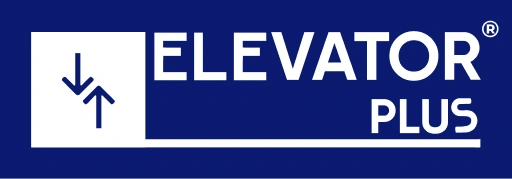
Every other elevator system was built for maintenance. Yours is built for installation.
Track lift installation projects floor by floor, site by site - from contract award to handover. Built for contractors running forty towers at once in Dubai, Riyadh and Doha.
Trusted By

EPIC ME Technical Works LLC runs on ElevatorPlus in the United Arab Emirates, Triolift in Saudi Arabia and Gulf Integrated Vertical Solutions in Bahrain - three named clients across three GCC states.

What ElevatorPlus Is?
ElevatorPlus is project and maintenance software for Gulf lift companies handling third-party inspections and multi-tower developments. It tracks every tower, every milestone and every handover document from contract award to the first maintenance contract - covering Dubai Municipality Inspection Reports and SASO Registration Certificates. The Gulf construction market is project-heavy by nature: a Gulf lift contractor's revenue base is installation income rather than recurring AMC, and the systems challenge reflects this. Every active tower needs its own milestone schedule, its own inspection log and its own handover pack, and the developer expects to see all of it on demand rather than waiting for a weekly update call. ElevatorPlus gives each tower its own project record with per-shaft milestone tracking, material delivery logs and inspection sign-offs - and the head-office dashboard shows the live status of every active project without anyone making a phone call to find out. When the project closes, the handover documentation - including commissioning records, warranty dates and third-party inspection results - carries directly into the AMC contract rather than being re-entered by the maintenance team. Subcontracted installation crews get mobile app access scoped to their own project stages, so head office sees one live view of site progress rather than twelve separate WhatsApp threads.
Gulf installation projects don't fail on the tools. They fail on visibility.
Multi-tower projects, staged handovers
Dozens of lifts across multiple towers, each on its own milestone schedule and approval clock. A developer's project manager does not ask for a status update by unit - they ask by tower, by phase and by completion percentage. Without a system that tracks progress at that level, the answer comes from a phone call to the site team, which means the answer is only as reliable as the last person who picked up.
Handover paperwork by hand
Approval documentation assembled manually across emails, WhatsApp threads and paper checklists - delaying handover and ultimately delaying payment. In a market where a completed handover package triggers a payment milestone, the speed of the paperwork directly determines when the invoice can be raised. A contractor who cannot produce the Dubai Municipality inspection log and the commissioning certificate on the day of handover is not just slow - they are at risk of losing the payment window entirely.
No live head-office visibility
Distributed site teams and subcontracted installers with no real-time head-office view of milestone completion progress. When a developer calls to ask which stage Tower C is at, the answer requires a call to the site manager, who may or may not have an accurate update. The contractors winning repeat work from Gulf developers are the ones who can pull up a live milestone report in the meeting room without making any calls at all.
One system, from contract award to handover.
Installation Project & Milestone Tracking
Job Import brings every project in; PMS Master and PMS Checklist track it stage by stage, per shaft, per floor. A developer asking for the current completion percentage gets a live answer from the dashboard - not an estimate assembled from the site team's last WhatsApp update. Every milestone is dated, assigned and closed against a defined record rather than a status that changes every time someone is asked.
PMS Checklist Stage Sign-Off
Each installation milestone is closed against a defined checklist, not a status guess. The checklist captures what was completed, by whom, on what date, with any photographic evidence attached - so the sign-off is a record rather than a verbal confirmation. Third-party inspection results from an EIAC-accredited body are logged against the same unit, in the same record, rather than filed separately.
Material & Equipment Tracking
Warehouse/Inventory Master plus PO and Delivery Challan formats give a full paper trail on what has arrived on site and what is still in transit. When a delay in material delivery threatens a milestone, the project manager sees it in the system before the site team reports it by phone. Delivery against PO is tracked so a missing component does not turn into a surprise on installation day.
Handover Checklist & Documentation
The Handover Checklist and Handover Format standardise what 'done' looks like on every project. Dubai Municipality inspection logs, SASO registration certificates, commissioning test results and warranty dates are all stored against the unit and exportable for the developer's handover pack - produced in one action rather than assembled across multiple sources.
Handover-to-AMC Transition
A completed Handover Format feeds directly into an AMC Quotation and Contract Format - no re-entering data, no risk of the maintenance team starting with outdated unit specifications. Warranty start dates, first statutory inspection dates and commissioning records all carry across, so the first maintenance visit has the full installation context behind it.
Contract & AMC Management
The commercial side of both the installation project and the maintenance relationship that follows it - in one system. Installation project contracts, AMC renewals, billing schedules and payment milestones are all tracked together, so the accounts team and the operations team are working from the same record rather than maintaining separate files that get out of step with each other.
Gulf Elevator Inspection & Compliance Requirements
Mandatory inspection regimes ElevatorPlus helps you track across key markets.
| Market | What is required | How often | Who enforces |
|---|---|---|---|
| UAE (Dubai) | Third-party inspection by an EIAC-accredited body | 12 months under DM-HSD-GU48; 6 months under EIAC accreditation rules for equipment lifting persons | Dubai Municipality |
| Saudi Arabia | Registration, then annual re-registration under the SASO Technical Regulation | Renewed annually, after periodic inspection results are assessed | SASO, with municipalities and Civil Defense |
| United Kingdom | Thorough examination under LOLER 1998 reg 9 | Six-monthly for lifts carrying people | HSE or the local authority |
Data compiled from official regulatory sources. Last reviewed August 2026.
Dubai's inspection interval is not settled. Dubai Municipality guideline DM-HSD-GU48 states 12 months, while EIAC applies a six-month interval to equipment that lifts persons. Confirm which applies with your accredited inspection body.
From contract award to go-live in weeks, not months
Discovery & Scope
Reviewing your current site plans and compliance guidelines.
Setup & Integration
Mapping towers, shafts, milestones, and uploading historical logs.
Live Team Training
Training back-office dispatchers and field crews on the mobile app.
Continuous Handover
Going live, compiling DM inspection logs, and preparing maintenance pipelines.
Simple pricing.
Everything included.
All modules, no per-user fees, no per-seat scaling. One flat price - contracts, PM, breakdown, inventory, installation, reporting.
See full pricing details- Contract & AMC Management
- PM & Job Scheduling
- Breakdown Checklists & Reports
- Warehouse & Inventory
- Installation Project Tracking
- Technician Mobile App
- Role-Based User Access
- MIS Reports & Dashboard
Switching from what you run today
What the move looks like - from spreadsheets, from a generic tool, and what happens to the data you have now.
If you are running on spreadsheets and WhatsApp
Most Gulf contractors we onboard are replacing a set of habits rather than a system. A handover tracker in Excel, a WhatsApp group per project, scanned certificates on a shared drive, and one coordinator holding it together across Dubai, Sharjah and a job in Riyadh. It works until two projects hand over in the same week.
The failure shows up at handover. A third-party inspection certificate cannot be located when the developer asks for the handover file. A snag list from a site visit lives on one engineer's phone. Nobody dropped the ball. The ball was being carried by hand.
If you are running a generic field service tool
The rest arrive from a general FSM platform, and the gap is the project. Those tools handle a service call. They do not handle an installation running over eighteen months across milestones, retention, variations and a handover pack that has to be complete before payment is released.
They also assume one currency and one country. A Gulf contractor billing in AED, SAR and BHD, with staff across three markets and inspection regimes that differ by emirate, ends up running the real business in a spreadsheet beside the software. ElevatorPlus treats multi-currency and multi-branch as defaults, not add-ons.
What happens to the records you already have
They come across. Project schedules, unit lists, client records, open snags, SABER and certification documents, and historical service data are imported during setup rather than re-entered. Spreadsheets import. Previous-system exports import. Your handover packs keep their history instead of restarting.
Support, once you are live
The question Gulf contractors ask most is whether support survives the sale. Onboarding is live training with your own site and office teams, and support continues after go-live rather than becoming a queue. The support window overlaps the Gulf working day, and the system runs in Arabic alongside English so the office and the site are not using two different tools. You can reach us on our international line, +1 (917) 893-3474.
The terms you will meet across the Gulf
The Gulf runs several regimes side by side. These are the ones that come up most.
EIAC
The Emirates International Accreditation Centre, which accredits the third-party bodies carrying out lift inspections in Dubai.
Full definitionThird-party inspection
An inspection by an EIAC-accredited body that is independent of the maintenance contractor. Worth knowing that the interval is not settled: Dubai Municipality guideline DM-HSD-GU48 states 12 months, while EIAC applies six months to equipment that lifts persons. Check which applies to your portfolio.
Full definitionSASO
The Saudi Standards, Metrology and Quality Organization. Under its Technical Regulation, no service lift may be used until registered with the competent authority, and that registration renews annually once periodic inspection results are assessed.
Full definitionSABER
The Saudi conformity platform through which products, including lift components, are registered for market access.
Full definitionASME A17.1
The North American safety code, widely referenced across Gulf specifications alongside European standards.
Full definitionEN 81-20 / EN 81-50
The European safety standards for the construction and installation of lifts, the other family commonly specified in Gulf projects.
Full definitionMore than 140 elevator industry terms are defined in the ElevatorPlus glossary, organised by letter and by category.
Operating in more than one market?
One account runs every country you work in, each lift on its own compliance schedule.
Frequently asked questions
Elevator project management software tracks new lift installation from contract award through to handover, covering site progress, material delivery, subcontractor crews, inspection sign-offs and payment milestones across multiple towers at once. It differs from maintenance software because the work is a finite project with a completion date, not a recurring service contract.
Yes. Each tower is a project with its own units, milestones, crews and progress against schedule, and every active project appears on one dashboard. Material delivery and installation stage are tracked per shaft, so a delay in one tower does not disappear inside a portfolio-level view.
Yes. Third-party inspection by an EIAC-accredited body is scheduled and recorded against each unit, with the report stored on the unit record. The interval is not settled - DM-HSD-GU48 states 12 months while EIAC applies six months to equipment that lifts persons - so ElevatorPlus lets you set it per unit and follow whichever your accredited body applies.
Yes. Under the SASO Technical Regulation, no service lift may be used until it is registered with the competent authority, and that registration is renewed annually once periodic inspection results are assessed. ElevatorPlus tracks that renewal date per unit and flags it ahead of expiry. The dated certificate required outside the car on the ground floor is stored on the same record.
Yes. Projects, contracts and invoices each run in their own currency, so a UAE project in AED and a Saudi project in SAR sit in the same account without conversion errors. Reporting rolls up to a single reference currency of your choosing.
At handover, the project's units, drawings, warranty dates and commissioning records carry across into a maintenance contract rather than being re-entered. That continuity matters because the warranty period and the first statutory inspection both start at handover, and both need the project history sitting behind them.
Yes. Subcontracted crews get app access scoped to their own scope of work, so they log progress, upload photos and record completed stages without seeing commercial data or other projects. You keep one live view of site progress instead of chasing WhatsApp updates.
Projects, contracts and invoices each run in their own currency, so a UAE project in AED and a Saudi project in SAR sit in the same account without conversion errors. Reporting rolls up to a single reference currency of your choosing, so the regional head-office view shows consolidated revenue across markets without anyone manually converting figures between currencies before the monthly meeting.
Yes, and the transition is the key feature. When an installation project closes, the unit record - including the commissioning certificate, warranty dates, inspection history and equipment specification - carries directly into the maintenance contract. The maintenance team does not start from a blank record; they start from the full project history. AMC renewal dates are tracked per unit, renewal alerts fire automatically, and the billing schedule runs from the same record as the service history.
Yes. Under the SASO Technical Regulation, no service lift may be used until it is registered with the competent authority, and that registration is renewed annually once periodic inspection results are assessed. ElevatorPlus tracks that renewal date per unit and flags it ahead of expiry. The dated certificate required outside the car on the ground floor is stored on the same unit record, so it is available on demand rather than located in a filing cabinet at the branch office.
How do I reach ElevatorPlus from the Gulf?
Call our international line on +1 (917) 893-3474 or email hello@elevatorplus.app. Our India office is on +91 91753 97887.
Ready to run your elevator business on autopilot?
Join elevator companies in 20+ countries already growing with ElevatorPlus.
Book a Strategy Call Now