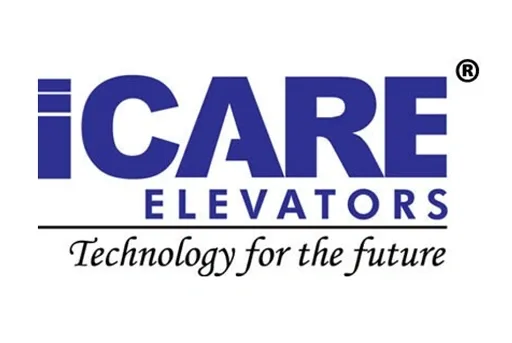
Never miss a thorough examination again. Six-monthly LOLER, tracked automatically.
ElevatorPlus tracks every lift's six-monthly LOLER examination, chases the report, and closes out the defects - so your compliance evidence is ready before anyone asks for it.
Trusted By

What ElevatorPlus Is?
ElevatorPlus is lift maintenance software built for UK companies managing LOLER thorough examinations. It schedules every six-monthly (twelve-monthly for goods-only) examination, chases every Report of Thorough Examination, and closes out every defect - built only for lift companies. LOLER 1998 Regulation 9 creates a statutory examination obligation that is absolute: a lift used by people at work must be thoroughly examined at least every six months, and that examination must be conducted by a competent person independent of the maintenance provider. ElevatorPlus models this as a two-party workflow - the maintenance provider and the competent person both have a role in the record, and the Report of Thorough Examination is stored on the unit rather than filed in a cabinet. Relevant defects under Regulation 10 are tracked from the point they are identified through to close-out, with the notification to the enforcing authority documented on the same record. For companies managing portfolios across multiple buildings or managing-agent clients, the platform groups each agent's properties and produces a consolidated compliance view per building - so the agent receives one report rather than a stack of individual job sheets, and you produce it without assembling a spreadsheet every month.
UK lift companies don't miss examinations by accident. They miss them because nothing is tracking them.
LOLER thorough examinations
Six months for lifts carrying people, twelve for goods-only, or a different interval where a written examination scheme is in place. Tracking these across a portfolio in a spreadsheet is a compliance liability - one missed date creates a notifiable defect situation under Regulation 10 that should have been managed, not discovered. The competent person's report has to be on file before the next examination is due, not chased the week before.
Technician scheduling across dense routes
London traffic, congestion charges and parking restrictions make every delayed job a cascade across the day's schedule. Without route-based visibility of which technician is nearest and what they are carrying, scheduling is guesswork. An urgent callback in the same area as a planned PM visit should be handled by the same technician - but only if the dispatcher can see that opportunity before committing two separate jobs to two separate people.
Managing-agent portfolio contracts
Multi-site, multi-building, per-agent reporting expectations with no centralised system to hold them all together. A managing agent overseeing fifty buildings wants one consolidated view of examination status, open defects and upcoming visits - not fifty separate job sheets. The lift companies winning and keeping agent contracts are the ones whose reporting is ready on demand rather than assembled manually every month before the agent asks for it.
From LOLER scheduling to defect close-out - in one system.
PM-Based Examination Scheduling
Six-monthly (or scheme-defined) LOLER intervals tracked automatically through PM Import, so every lift stays on its statutory clock without anyone manually updating a schedule. Approaching examination dates are flagged in advance, not discovered on the day they fall due. Where a written examination scheme sets a different interval, that is configurable per unit.
Report of Thorough Examination
A defined Service Report Format produced consistently on every examination visit - ready for the competent person and retained on the unit record. The report is stored against the specific lift, so when an HSE inspector asks for the last three reports, you open the unit and they are there. Nothing is filed in a folder that only one person knows how to navigate.
Defect Checklist & Close-Out
Every defect raised and tracked through to close-out against the Breakdown Checklist, satisfying the LOLER Regulation 10 requirement for relevant defects. The notification to the enforcing authority is documented on the same record as the defect itself, so the close-out trail is complete and auditable from first identification to final sign-off.
PPM Contract & AMC Management
The maintenance schedule and the commercial contract held together in one Contract/AMC Format. Contract renewal dates are flagged before they lapse, billing schedules run from the contract record, and the examination history for each unit is accessible from the same view. Operations and accounts are looking at the same data rather than maintaining separate files.
Portfolio Reporting by Branch & Area
A managing agent's buildings are grouped and reported through Branch Master and Area Master, so the consolidated view an agent expects is a standard report rather than a monthly assembly exercise. Examination status, open defects and completed visits per property - produced on demand, not built from a spreadsheet the night before the agent asks.
Role-Based Technician Access
Each technician sees only their assigned buildings and visits, with no visibility of other accounts, contract financials or company-wide data. Branch managers see their portfolio without access to other branches. Permissions are configured once and enforced across every login, so data confidentiality between clients and between branches is maintained without relying on people remembering what to look at.
UK Lift Inspection & Compliance Requirements
Mandatory inspection regimes ElevatorPlus helps you track across key markets.
| Market | What is required | How often | Who enforces |
|---|---|---|---|
| United Kingdom | Thorough examination under LOLER 1998 reg 9 | Six-monthly for lifts carrying people, twelve-monthly goods-only | HSE or the local authority |
| Germany | Hauptprüfung and Zwischenprüfung under BetrSichV | Hauptprüfung at most every two years, Zwischenprüfung at the midpoint | ZÜS |
| United States | Category 1 and Category 5 tests, ASME A17.1/CSA B44 | Per the edition adopted by the jurisdiction | AHJ and the state elevator board |
Data compiled from official regulatory sources. Last reviewed August 2026.
From contract award to go-live in weeks, not months
Discovery & Scope
Reviewing your current site plans and compliance guidelines.
Setup & Integration
Mapping towers, shafts, milestones, and uploading historical logs.
Live Team Training
Training back-office dispatchers and field crews on the mobile app.
Continuous Handover
Going live, migrating historical service records, and setting up your maintenance schedules.
Simple pricing.
Everything included.
All modules, no per-user fees, no per-seat scaling. One flat price - contracts, PM, breakdown, inventory, installation, reporting.
See full pricing details- Contract & AMC Management
- PM & Job Scheduling
- Breakdown Checklists & Reports
- Warehouse & Inventory
- Installation Project Tracking
- Technician Mobile App
- Role-Based User Access
- MIS Reports & Dashboard
Switching from what you run today
What the move looks like - from spreadsheets, from a generic tool, and what happens to the data you have now.
If you are running on spreadsheets and WhatsApp
Most UK lift companies we onboard are not replacing software. They are replacing a routine. A six-monthly schedule in Excel, a folder of scanned examination reports, an engineer group chat, and one office manager who knows which portfolio is due when. It holds up until the portfolio grows or that person is off for a fortnight.
The failure is quiet. A thorough examination falls due on a unit that moved between contracts. A Report of Thorough Examination cannot be produced when a managing agent asks for it, because it is in an email thread from eight months ago. Nobody was careless. The tracking was simply a person's memory with a spreadsheet attached.
If you are running a generic field service tool
The rest come from a general FSM platform. Those tools dispatch an engineer and close a job perfectly well. What they lack is the lift itself as a permanent record. There is nowhere to hold one unit across years of examinations, defects, remedial work and LOLER dates, because they were designed for trades where the asset is interchangeable.
So examination tracking becomes custom fields, and defect close-out becomes a spreadsheet beside the system. ElevatorPlus builds from the unit outward, so the examination schedule, the defect list and the close-out evidence sit on the lift rather than in a report someone assembles before an audit.
What happens to the records you already have
They transfer. PPM contracts, site and unit lists, managing-agent portfolios, open defects and historical examination data are imported during setup rather than typed in again. Spreadsheets import. Exports from a previous system import. You do not start with an empty database, because an examination history that begins on go-live day is not much of a history.
Support, once you are live
The question UK companies ask most is what happens once the contract is signed. Onboarding is live training with your own engineers and office team, not a link to a video library, and support carries on after go-live rather than becoming a ticket queue. The support window covers the UK working day. If an engineer cannot file a report from site on a Tuesday morning, that gets answered the same morning. You can reach us on our international line, +1 (917) 893-3474.
The terms you will meet in UK lift compliance
These are the words that come up in every UK demo. Short definitions here, full ones in the glossary.
LOLER
The Lifting Operations and Lifting Equipment Regulations 1998, which govern the thorough examination of lifts used by people at work.
Full definitionPUWER
The Provision and Use of Work Equipment Regulations 1998, covering the duty to keep work equipment maintained and safe. It runs alongside LOLER, and neither one discharges the other.
Full definitionThorough examination
A statutory examination by a competent person, required at least every six months for lifts carrying people and twelve-monthly for goods-only lifts, or at the intervals set by a written examination scheme.
Full definitionReport of Thorough Examination
The formal document produced after a thorough examination. It is a statutory record, not a service sheet, and it must contain eleven specified particulars.
Full definitionCompetent person
The person carrying out the thorough examination, who must be sufficiently independent and impartial of the organisation maintaining the lift to make objective decisions.
Full definitionWritten examination scheme
An alternative to LOLER's standard intervals, drawn up by a competent person, specifying when a particular lift must be examined.
Full definitionACOP L113
The HSE Approved Code of Practice for the safe use of lifting equipment. Not the regulation itself, but failure to follow it is admissible in criminal proceedings.
Full definitionBS 7255
The British Standard code of practice for safe working on lifts, current edition BS 7255:2023, governing how engineers work on site.
Full definitionMore than 140 lift industry terms are defined in the ElevatorPlus glossary, organised by letter and by category.
Operating in more than one market?
One account runs every country you work in, each lift on its own compliance schedule.
Frequently asked questions
ElevatorPlus is built for lift companies, not adapted from generic job management software. It handles LOLER thorough examination scheduling, the Report of Thorough Examination, defect escalation under Regulation 10, and portfolio reporting for managing agents. ICARE Elevators Limited runs on it in the UK.
ElevatorPlus manages service contracts, breakdown response, engineer scheduling and statutory examination records in one system. More than 200 lift companies use it across 20+ countries, rated 4.9 from 128 Google reviews. In the UK, ICARE Elevators Limited is a live customer.
ElevatorPlus schedules planned maintenance visits by route, engineer and contract, and schedules statutory thorough examinations separately, because those run on their own legal clock. Visits are grouped geographically to cut travel time, and the system flags an approaching examination date before it slips.
ElevatorPlus gives lift engineers the job history, unit details and previous defect list on their phone before they arrive, and it works offline in a lift pit. Job sheets, photos and customer signatures are captured on site and sync back automatically, so nothing is rekeyed at the office.
Yes. Examination dates are tracked per lift at six-monthly intervals for lifts carrying people, twelve-monthly for goods-only lifts, or against a written examination scheme where one is in place. The system also models the competent person being independent of the maintenance provider, which is a two-party workflow.
Under LOLER 1998 Regulation 9, a lift used by people at work must be thoroughly examined at least every six months. Goods-only lifts are twelve-monthly. A different interval is permitted where a written examination scheme drawn up by a competent person specifies one.
Your data can be hosted in the UK or in the EU, and the region is confirmed in writing before onboarding. Because it stays in region, no third-country transfer mechanism is needed for your operational data. ElevatorPlus is fully compliant with the General Data Protection Regulation, Regulation (EU) 2016/679, and with UK GDPR.
Yes. Where you service lifts across a managing agent's portfolio, you can report by site, by building and by client, so the agent receives one consolidated view. Examination status, open defects and completed visits are visible per property without you assembling a spreadsheet each month.
LOLER requires the competent person conducting the thorough examination to be independent of the maintenance provider. ElevatorPlus models this as a two-party workflow - the maintenance visits and the examination visits are tracked separately, each with their own records, so the independence is reflected in the documentation rather than collapsed into a single service record. The Report of Thorough Examination sits on the unit alongside - but distinct from - the routine service history.
Yes. Regional branches are modelled through Branch Master and Area Master, so a portfolio spread across England, Scotland and Wales runs in one account with separate reporting per region. Each managing agent's buildings are grouped together regardless of which technician services them, so the agent view is always at the client level rather than the technician level. Reporting periods, open defects and examination status are all available per client without filtering a company-wide export.
Regulation 10 requires that where a thorough examination reveals a defect involving an existing or imminent risk of serious personal injury, the competent person must send a copy of their report to the relevant enforcing authority - HSE or the local authority. ElevatorPlus records the notification on the same defect record so the close-out trail is complete: defect identified, notification made, remedial action taken, defect closed. The entire sequence is on one record rather than across several email chains.
How do I reach ElevatorPlus from the UK?
Call our international line on +1 (917) 893-3474 or email hello@elevatorplus.app. Our India office is on +91 91753 97887.
From Our Blog

Last updated: 10 August 2026
Ready to run your elevator business on autopilot?
Join elevator companies in 20+ countries already growing with ElevatorPlus.
Book a Strategy Call Now