The renewal that stops a lift is the one nobody was tracking.
Built for lift contractors in Singapore, Malaysia and the Philippines who cannot afford a lapsed permit.
Trusted By

VTSA Schneider Lifts runs its lift maintenance operation on ElevatorPlus in the Philippines. Elevating Solutions in Nepal was our first international customer, onboarded entirely online with no site visit, alongside Rycon Group.

What ElevatorPlus Is?
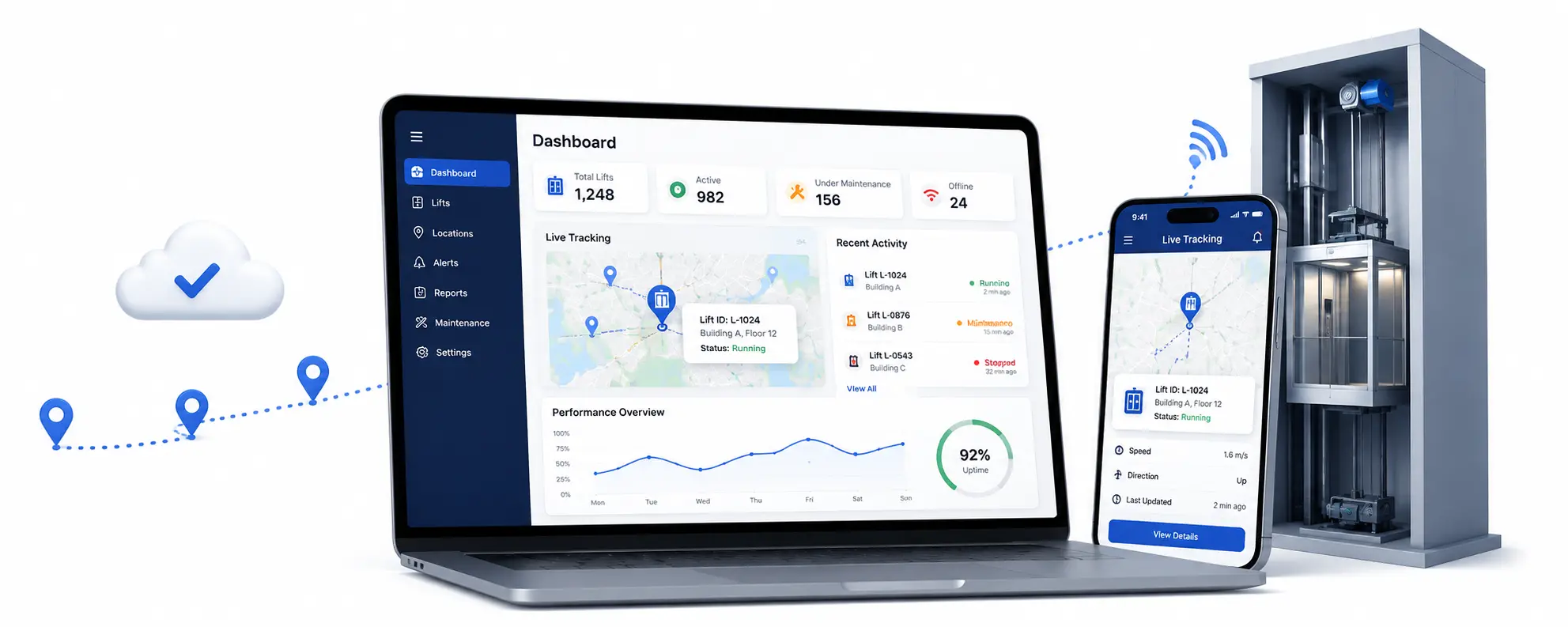
ElevatorPlus is permit and certificate tracking software for lift companies across Singapore, Malaysia, the Philippines and Indonesia - tracking Permits to Operate, Certificates of Fitness and renewal dates per lift. Southeast Asia operates some of the strictest elevator safety regimes in the world. Singapore's Building and Construction Authority requires a Permit to Operate under the Building Control (Fixed Installations) Regulations 2025, renewed every 12 months - a lapsed permit does not produce a warning, it stops the lift. Malaysia's DOSH Certificate of Fitness runs on a 15-month cycle under the Occupational Safety and Health Act 1994 and the 2024 Plant Requiring Certificate of Fitness Regulations. In the Philippines, the DOLE Rule 1220 permit and the Certificate of Operation from the local Building Official are both annual obligations running on separate clocks - two deadlines per lift rather than one. For a lift contractor managing several hundred units across two or three of these markets, the compliance calendar has dozens of renewal dates active at any given time. ElevatorPlus tracks every renewal date per unit, stores the certificate on the unit record, and fires alerts before each expiry. Technicians close each maintenance visit from the mobile app in the field, producing an auditor-ready Service Report Format automatically - so the inspection evidence is on file before any authority asks for it. High-rise buildings in Singapore and Kuala Lumpur that carry twenty or more lifts are managed as a single site, with all units grouped under the building so property managers receive a building-level compliance view rather than a list of individual asset records.
Southeast Asian lift contractors manage some of the densest portfolios in the world. Without a system, things slip.
A lapsed permit stops the lift
Renewal depends on inspection records being complete and submitted on time. One missed deadline in Singapore shuts down the unit immediately - BCA enforcement is not a warning system. In Malaysia, a lapsed Certificate of Fitness triggers a stop-use order under DOSH. In the Philippines, operating a lift on an expired DOLE Rule 1220 permit is a statutory violation. The income stops the moment the permit lapses, and the reputational damage to the contract follows shortly after.
Vertical density
A single high-rise tower in Singapore's CBD or Kuala Lumpur's KLCC area can carry twenty or more lifts and escalators, each requiring its own quarterly maintenance record, its own permit status and its own breakdown history. Property managers in this market expect reporting at building level - they want to know the compliance status of their building, not a list of individual asset IDs. The lift companies winning high-rise contracts are the ones who can deliver a building-level view on demand.
Three regimes, one portfolio
Singapore's Permit to Operate, Malaysia's Certificate of Fitness and the Philippines' dual DOLE and Building Official obligations each run on different clocks, with different evidence requirements and different enforcing authorities. A contractor managing units across two or three of these markets tracks dozens of renewal dates simultaneously. Miss one in Singapore and the lift stops. Miss one in the Philippines and two separate authorities need to be notified.
Permit renewals to service reports - one system for every market.
Permit & PM Renewal Scheduling
Periodic renewal cadence tracked through PM Import - Singapore's 12-month PTO, Malaysia's 15-month Certificate of Fitness, the Philippines' dual annual obligations - each set per unit on its own statutory clock. Renewal alerts fire in advance so the inspection can be booked and the records prepared before the deadline, not after the permit has already lapsed.
Per-Building Lift Asset Register
Product and Inventory Master holds every unit per building, so a 30-floor tower in Singapore with 18 lifts is managed as one site with all units underneath it. Property managers receive a building-level compliance view rather than a list of individual asset records. Permit status, open defects and service history all roll up to the building so the report the manager expects is the report you produce.
Maintenance Contract Management
Every contract tracked in one Contract/AMC Format, with renewals flagged before they lapse. In a market where the maintenance contract and the permit renewal are linked - a lapsed maintenance record can block a permit renewal - having both on the same record matters. Contract close-out and permit renewal dates are visible together so neither catches the operations team by surprise.
Breakdown Checklist & Job Logging
Every breakdown closed on a defined checklist with a structured service record produced automatically. No unstructured job records and no paper forms to transcribe later. In Singapore's regulatory environment where quarterly maintenance records must be available for BCA inspection, a complete digital record on every visit is the standard the job requires, not an improvement on what was there before.
Technician Mobile App
Checklists and attendance captured on the device in the field, in the language the technician works in, synced back to the office the moment the job closes. A technician covering multiple floors of a high-rise building in one visit closes every unit before leaving the building - no paper forms, no end-of-day data entry, no risk that a visit record is incomplete when the permit renewal audit arrives.
Auditor-Ready Report Export
Service and Breakdown Report Format output produced on every visit - ready to hand to a BCA inspector, a DOSH officer or a Building Official on demand. The report is generated automatically when the job closes, stored against the unit, and exportable at any time. There is no preparation step between completing the work and producing the compliance evidence.
Southeast Asia Lift Inspection & Compliance Requirements
Mandatory inspection regimes ElevatorPlus helps you track across key markets.
| Market | What is required | How often | Who enforces |
|---|---|---|---|
| Singapore | Permit to Operate, under the Building Control (Fixed Installations) Regulations 2025 | Renewed every 12 months | Commissioner of Building Control |
| Malaysia | Certificate of Fitness, under the Occupational Safety and Health Act 1994 | 15-month cycle | DOSH |
| Philippines | DOLE Rule 1220 permit and Certificate of Operation (NBC Form M-08) | Both annual, on separate clocks | DOLE Regional Office and the local Building Official |
Data compiled from official regulatory sources. Last reviewed August 2026.
From contract award to go-live in weeks, not months
Discovery & Scope
Reviewing your current site plans and compliance guidelines.
Setup & Integration
Mapping towers, shafts, milestones, and uploading historical logs.
Live Team Training
Training back-office dispatchers and field crews on the mobile app.
Continuous Handover
Going live, migrating historical service records, and setting up your maintenance schedules.
Simple pricing.
Everything included.
All modules, no per-user fees, no per-seat scaling. One flat price - contracts, PM, breakdown, inventory, installation, reporting.
See full pricing details- Contract & AMC Management
- PM & Job Scheduling
- Breakdown Checklists & Reports
- Warehouse & Inventory
- Installation Project Tracking
- Technician Mobile App
- Role-Based User Access
- MIS Reports & Dashboard
Switching from what you run today
What the move looks like - from spreadsheets, from a generic tool, and what happens to the data you have now.
If you are running on spreadsheets and WhatsApp
Most Southeast Asian lift companies we onboard are replacing a routine rather than a system. A renewal tracker in Excel, certificates scanned to a drive, a technician chat group, and one person who knows which building is due. It holds until the portfolio spans two countries with different renewal cycles.
The failure is the renewal. A Certificate of Fitness lapses on a unit that changed building manager, so the reminder went to an address nobody reads. The lift stops being legal to operate and the first anyone knows is a phone call. Nobody forgot on purpose. The tracking was a spreadsheet and a person's memory.
If you are running a generic field service tool
The rest come from a general FSM platform, and the gap is the certificate. Those tools schedule a job and close it. They have no concept of a unit whose right to operate expires on a date, and whose renewal depends on an inspection, a report and a submission, each with its own lead time.
They also assume one country. A contractor operating in Singapore, Malaysia and the Philippines is running three renewal regimes, three sets of documentation and often three currencies. ElevatorPlus holds the regime on the unit, so a SS 550 portfolio and a Certificate of Operation portfolio sit in one system.
What happens to the records you already have
They transfer. Contracts, unit registers, customer records, open jobs and historical inspection data are imported during setup rather than re-keyed. Spreadsheets import. Previous-system exports import. Certificates and inspection reports stay attached to the units they belong to, with their expiry dates intact.
Support, once you are live
The question companies here ask most is whether support is real once the invoice is paid. Onboarding is live training with your own technicians and office staff, and support continues after go-live rather than becoming a ticket queue. The support window overlaps the SGT working day, and the technician app runs in multiple languages so the field team is not forced into English. You can reach us on our international line, +1 (917) 893-3474.
The terms you will meet across Southeast Asia
Three markets, three renewal regimes, and terms that look similar but are not interchangeable.
Permit to Operate
The permit required for every lift in Singapore under the Building Control (Fixed Installations) Regulations 2025, issued by the Commissioner of Building Control and valid for 12 months.
Full definitionSS 550
The Singapore Standard code of practice for the installation, operation and maintenance of electric passenger and goods lifts. Current edition SS 550:2020 with Amendment 1:2022.
Full definitionSpecialist Professional Engineer
The independent engineer, registered in lift and escalator engineering, who supervises Singapore's annual lift examination. Not to be confused with an Authorised Examiner, which belongs to a different regulatory regime entirely.
Full definitionCertificate of Fitness
The Malaysian lift certificate issued by DOSH on a 15-month cycle under the Occupational Safety and Health Act 1994. The 15-month cycle is the detail that catches operators used to annual renewals.
Full definitionCertificate of Operation
Issued by the local Building Official in the Philippines under PD 1096 on NBC Form No. M-08, valid one year from the date of inspection. A separate DOLE Rule 1220 permit is also required for lifts in a place of employment.
Full definitionEN 81-20 / EN 81-50
The European safety standards for lift construction and installation, commonly referenced in regional project specifications.
Full definitionMore than 140 lift industry terms are defined in the ElevatorPlus glossary, organised by letter and by category.
Operating in more than one market?
One account runs every country you work in, each lift on its own compliance schedule.
Frequently asked questions
Yes. Permit to Operate renewal dates are tracked per lift and flagged ahead of expiry, with the permit document stored on the unit record. Because each Southeast Asian market runs its own permit regime, the renewal clock is set per installation rather than as one company-wide rule.
Yes. A high-rise building is managed as a site with every lift and escalator under it, so a technician's visit covers the building rather than a single asset. Service history, open defects and permit status roll up per building, which is how property managers ask to receive reporting.
Yes. Malaysia's DOSH Certificate of Fitness runs on a 15-month cycle under the Occupational Safety and Health Act 1994 and the 2024 Plant Requiring Certificate of Fitness Regulations. ElevatorPlus tracks that cycle per lift and flags renewal before expiry, with the certificate stored against the unit.
Yes, and both matter, because they are separate obligations with separate clocks. A DOLE Rule 1220 permit runs for one year, and the local Building Official issues a Certificate of Operation under PD 1096. ElevatorPlus tracks both per lift, so neither lapses while the other is still current.
Yes, entirely. Elevating Solutions in Nepal was our first international go-live and never had a site visit. Data import, configuration and technician training all run online, which removes the travel cost and the delay of waiting for a visit to be scheduled.
SGD, MYR, PHP, IDR and any other currency you invoice in are supported, with contracts and invoices held in the customer's own currency. Reporting rolls up to one reference currency, so a regional operator sees consolidated numbers without converting anything by hand.
Singapore's BCA requires maintenance records to be kept for every quarterly service visit and made available for inspection. ElevatorPlus produces a Service Report Format on every visit, stored against the unit record from the moment the technician closes the job. When a BCA inspection is announced, the last four quarters of maintenance records are available immediately - no preparation, no assembly from paper files, no risk that one quarterly visit is missing from the sequence.
Yes. The platform is designed for multi-market operation. A company starting in Singapore that expands into Malaysia adds a Malaysian branch in the same account, with Malaysia's Certificate of Fitness cycle configured per unit. Expanding into the Philippines adds a Philippine branch with both DOLE and Building Official obligations tracked per unit. There is no additional system to buy or integrate - the multi-market structure is already in place.
Yes, entirely. Elevating Solutions in Nepal was our first international go-live and never had a site visit - data import, configuration and technician training all ran online. VTSA Schneider Lifts in the Philippines onboarded the same way. The process does not require travel and does not require a long implementation project. Most companies are live within weeks of committing to proceed.
How do I reach ElevatorPlus from Southeast Asia?
Call our international line on +1 (917) 893-3474 or email hello@elevatorplus.app. Our India office is on +91 91753 97887.
From Our Blog

Last updated: 10 August 2026
Ready to run your elevator business on autopilot?
Join elevator companies in 20+ countries already growing with ElevatorPlus.
Book a Strategy Call Now